Friday, December 6, 2024

Extracellular vesicle DNA regulates immune responses and suppresses liver metastasis


In a recent study published in Nature Cancer, a team of researchers investigated the unique structure of deoxyribonucleic acid (DNA) in extracellular vesicles (EVs) and its role in cancer progression.

The study examined how EV-DNA, through its association with histones, influences immune cell responses and impacts the pre-metastatic niche. It also explored how it could serve as a predictive biomarker for metastasis, especially in colorectal cancer.

Background

Extracellular vesicles are nano-sized structures secreted by cells to mediate communication, especially in disease contexts such as cancer.

These vesicles carry diverse molecular particles, including DNA, proteins, and ribonucleic acid (RNA). Previous research has shown that EVs are involved in preparing distant organs for tumor colonization by forming pre-metastatic niches.

However, while many of the proteins and RNA in EVs have been linked to tumor progression, the role of EV-DNA remains less clear.

About the study

As genomic DNA constitutes a significant fraction of EV-DNA, it presents a potential marker for tumor-specific mutations. The gap in knowledge about the functions and mechanisms of EV-DNA in cancer also necessitates further research to understand its influence on cancer metastasis and immune regulation, as well as its potential clinical applications.

The present study employed a combination of cellular, molecular, and in vivo techniques to investigate the role of EV-DNA in cancer progression. Using ultracentrifugation, extracellular vesicles were isolated from various cancer cell lines, including colorectal and breast cancer models.

Major findings

The findings suggested that EV-DNA has a critical role in inhibiting metastasis through immune activation. The researchers identified the primarily genomic and chromatinized EV-DNA as a key trigger for immune responses when taken up by liver macrophages or Kupffer cells.

After taking up EV-DNA, these cells exhibited activation of DNA damage response pathways, leading to the production of cytokines that promote antitumor immunity.

Conclusions

Overall, the study established EV-DNA as an important factor in activating immune defenses against metastasis and highlighted its unique chromatin structure. The findings demonstrated that EV-DNA levels are inversely correlated with metastatic potential, offering a promising biomarker for assessing cancer prognosis.

By elucidating the mechanisms of EV-DNA’s impact on immune activation and metastasis, the study paved the way for innovative therapeutic strategies targeting EVs in cancer treatment.

website: popularscientist.com

#ExtracellularVesicles
#EVs
#DNAResearch
#Immunology
#ImmuneRegulation
#LiverMetastasis
#CancerResearch
#MetastasisSuppression
#TumorMicroenvironment
#OncologyResearch


Thursday, December 5, 2024

Regulatory Framework for Ayush Medicines


The regulatory framework for Ayurveda, Siddha, and Unani medicines is governed by specific guidelines, which ensure safety, efficacy, and quality in drug manufacturing and distribution. The Drugs Rules, 1945, play a very important role in this process.

Licensing Requirements


Manufacturers must obtain licenses to produce Ayurveda, Siddha, and Unani drugs. They must provide evidence of safety and effectiveness. Compliance with Good Manufacturing Practices (GMP) is mandatory. Failure to comply can lead to license suspension or cancellation under Rule 159.


Role of Authorities


State Drug Controllers and Licensing Authorities enforce the rules. They oversee licensing and compliance for manufacturers. They ensure that the guidelines are strictly followed to maintain drug quality.


Drug Testing Laboratories


The Drugs Rules outline the approval process for Drug Testing Laboratories. Currently, 106 laboratories are authorised to test the quality of Ayush drugs and raw materials. Thirty-four State laboratories have received support to enhance their testing capabilities.


Quality Control Standards


The Ministry of Ayush, via the Central Council for Indian Medicine and Homeopathy (PCIM&H), establishes quality control standards. These standards cover identity, purity, and strength of the drugs. Thousands of quality standards for raw materials and formulations have been published.


Advertising Regulations


The Drugs and Magic Remedies (Objectionable Advertisements) Act, 1954, prohibits misleading drug advertisements. Penalties are imposed on violators. The Ministry of Ayush monitors Ayush drugs through Pharmacovigilance Centres, allowing consumer feedback on misleading ads.


Research Initiatives


The government promotes scientific research in Ayush systems. Councils for research focus on medicinal plants, drug standardisation, and clinical trials. Collaborative efforts with universities and hospitals enhance research credibility.

The National Commission for Indian System of Medicine and the National Commission for Homeopathy provide ethical guidelines. These guidelines ensure practitioners maintain high standards of practice in their respective fields.


website: popularscientist.com


#AyushMedicines 

#TraditionalMedicine 

#AyushRegulation 

#HealthPolicy 

#AlternativeMedicine 

#AyushSafety 

#HerbalMedicine 

#Ayurveda 

#Siddha 

#Homeopathy 

#Unani 

#WellnessRegulation 

#AyushStandards 

#ComplementaryMedicine

 #NaturalHealthcare

Wednesday, December 4, 2024

“Extremely Rare” – Researchers Discover Extraordinary Tiny Insect Fossils in New Zealand


Tiny whitefly fossils discovered in Hindon Maar offer rare insights into New Zealand’s ancient ecosystems. These 15-million-year-old specimens highlight whiteflies’ role in past forests and mark a significant addition to New Zealand’s growing insect fossil record.


Newly discovered insect fossils are so small they can barely be seen by the human eye but have been preserved in an “extraordinary” way.

Published in the journal Palaeobiodiversity and Palaeoenvironments, a new study reveals rare whitefly insect fossils have been found in Miocene age crater lake sediments at Hindon Maar, near Dunedin.

Adult whiteflies are tiny insects about 3mm in size, smaller if they are immature.

The fossils found at Hindon Maar are about 1.5mm by 1.25mm and have been preserved in the position they lived and died, attached to the underside of a fossil leaf.

Exceptional Preservation and Unique Features

Black with an oval-shaped body, they have some similarities to modern-day whiteflies – such as the shape and color – but differ in that all the segments of the body are distinctly defined by deep sutures.

Co-author Dr Uwe Kaulfuss, of the University of Göttingen in Germany and former postdoctoral fellow in the University of Otago’s Department of Geology, discovered the tiny fossils during an excavation at Hindon earlier this year.

“Fossils of adult whitefly insects are not uncommon, but it takes extraordinary circumstances for the puparia – the protective shell the insect emerges from – to become fossilized,” Dr Kaulfuss says.

“Some 15 million years ago, the leaf with the puparia must have become detached from a tree, blown into the small lake, and sank to the deep lake floor to be covered by sediment and become fossilized. It must have happened in rapid succession as the tiny insect fossils are exquisitely preserved.

“The new genus and species described in our study reveals for the first time that whitefly insects were an ecological component in ancient forests on the South Island.”

Insight into New Zealand’s Fossil Record

“It was difficult to see much with the naked eye but once the fossils were under a microscope, we could see the amazing detail,” she says.

“The fact that they are still in life position on the leaf is incredible and extremely rare. These little fossils are the first of their kind to be found in New Zealand and only the third example of such fossil puparia known globally.


website: popularscientist.com


#Paleontology 

#FossilDiscovery 

#InsectFossils 

#NewZealandResearch 

#RareFind 

#EvolutionaryBiology 

#NaturalHistory #

ScientificDiscovery

Tuesday, December 3, 2024

India’s Nuclear Energy Ambitions and Challenges


 India has a long history with nuclear energy, with the Atomic Energy Commission established shortly after independence. Over 75 years, the country has developed a nuclear power capacity of 8,180 MW, which includes 2,000 MW from Russia. While this capacity is modest, India possesses the technology and uranium access to expand its nuclear sector.

Current Nuclear Capacity


India’s nuclear power capacity stands at 8,180 MW, which includes contributions from international partners. The country excels in pressurised heavy water reactors. India has a strong safety record in nuclear energy production.


Thorium’s Potential


Thorium is India’s second-largest energy resource after coal, which could play a vital role in future energy security. As coal usage declines due to climate concerns, thorium presents an alternative. However, India has yet to harness thorium for energy generation.


Three-Stage Nuclear Programme


Dr. Homi Bhabha designed India’s three-stage nuclear programme. The first stage uses natural uranium in pressurised heavy water reactors. The second stage employs plutonium-239 in fast-breeder reactors. The third stage aims to utilise thorium and plutonium-239 to create uranium-233. Progress has stalled at the second stage, hindering overall advancement.


Accelerator-Driven Subcritical System (ADSS)


The ADSS project involves generating neutrons with particle accelerators. This system could help produce energy and manage nuclear waste. Discussions began in 2003, but the project remains in early stages. Plans for a 1 GeV particle accelerator are only now being considered.


Delayed Projects


Several key projects face delays:

  • The 500 MW prototype fast-breeder reactor has not been completed since construction began in 2004.
  • The advanced heavy water reactor (AHWR) has been ready for over 20 years but awaits deployment approval.
  • The Indian high-temperature reactor (IHTR) is also delayed.

New technologies like small modular reactors are emerging. India must not delay its nuclear energy ambitions. Efficient fuels and innovative designs could help meet future energy needs.


website: popularscientist.com


#IndiaNuclearFuture

#EnergyIndependence

#NuclearPowerIndia
#SustainableEnergy
#CleanEnergyGoals
#IndiaEnergyTransition
#NuclearChallenges
#EnergyForGrowth
#AtomicEnergyIndia
#GreenNuclear


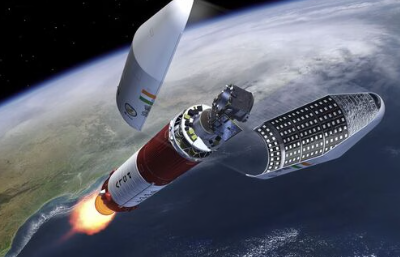
ISRO’s PSLV Launches Proba-3 Mission


 ISRO’s Polar Satellite Launch Vehicle (PSLV) will take off from Sriharikota on December 4, 2024, at 4:08 pm. The launch involves collaboration with the European Space Agency (ESA) and New Space India Limited (NSIL).

About the PSLV


The PSLV is ISRO’s trusted launch vehicle, which has a proven track record for reliability and versatility. The rocket is capable of launching satellites into various orbits. It has successfully completed numerous missions since its first flight in 1993.


Proba-3 Mission Overview


The Proba-3 mission is a groundbreaking initiative, which is the first precision formation flying mission in the world. The mission aims to deploy two satellites into a special elliptical orbit. These satellites will weigh a combined total of 550 kg.


Scientific Objectives


The primary goal of the Proba-3 mission is to study the solar corona. The solar corona is the outermost layer of the Sun’s atmosphere. It is known for its extreme temperatures and dynamic behaviour. About the corona is crucial for solar physics and space weather forecasting.


Collaboration Details

ISRO is working closely with ESA on this mission. New Space India Limited (NSIL) is also involved in the launch. This partnership enhances international cooperation in space exploration. It showcases India’s growing capabilities in the global space arena.The launch will take place at the Sriharikota spaceport in Andhra Pradesh. The PSLV’s reliability makes it suitable for complex missions like Proba-3. The mission is expected to contribute valuable data to solar research.

website: popularscientist.com

#ISRO

 #PSLV

 #Proba3Mission

 #SpaceExploration

 #SatelliteLaunch

 #IndianSpaceProgram

 #Proba3

 #SpaceInnovation

 #Astronomy

 #OrbitalMission

 #ISROAchievement

s #PSLVLaunch

 #SpaceTechnology

 #SatelliteDeployment

 #MissionSuccess

 #ISROMissions

 #SpaceScience

 #OrbitalExploration

 #ProbaSatellite

 #SpaceResearch

Monday, December 2, 2024

Network Readiness Index 2024


India has achieved remarkable progress in the Network Readiness Index (NRI) 2024. The country has climbed 11 places to rank 49th, up from 60th in 2023, which evaluates 133 economies based on technology, people, governance, and impact.

Key Areas of Evaluation


The NRI assesses four main areas – Technology, People, Governance, and Impact, which utilize 54 different indicators to measure performance. This comprehensive evaluation provides vital information about each country’s digital readiness.


India’s Score Improvement


India’s score has risen from 49.93 in 2023 to 53.63 in 2024. This improvement reflects the country’s enhanced digital infrastructure and services.


Leading Indicators


India ranks 1st in “AI scientific publications,” “AI talent concentration,” and “ICT services exports.” It holds the 2nd position for “FTTH/Building Internet subscriptions,” “Mobile broadband internet traffic,” and “International Internet bandwidth.” Additionally, it ranks 3rd in “Domestic market scale” and 4th in “Annual investment in telecommunication services.”


Performance Among Lower-Middle-Income Countries


Among lower-middle-income countries, India ranks 2nd, following Vietnam. This positioning marks India’s important advancements in digital technology compared to its peers.


Digital Transformation Initiatives


India’s digital transformation has accelerated over the past decade. The Department of Telecommunications (DoT) has overseen substantial growth in telecommunication infrastructure. Tele density has risen from 75.2% to 84.69%. Wireless connections have reached 119 crore.


Impact of Digital India Initiative


The Digital India initiative has increased broadband access in rural areas. Internet subscribers have surged from 25.1 crore to 94.4 crore, with a notable rise in wireless internet usage.Reforms in spectrum management, business regulations, and consumer protection have boosted the telecom sector. These changes have created a more conducive environment for growth and innovation.


Advancements in 5G Services


India launched 5G services in 2022, boosting its global mobile broadband speed ranking from 118th to 15th. This rapid improvement puts stress on India’s commitment to enhancing its telecommunications capabilities.


India is pursuing the Bharat 6G Vision, aiming to lead in future telecom technologies. Investments in emerging technologies and strong data capabilities will support this vision.


website: popularscientist.com


#NetworkReadinessIndex

#DigitalTransformation

#InnovationLeadership

#AILeadership

#DigitalInclusion

Black Holes Could Help Life Thrive, Not End It

  Black holes may not be as life-destroying as we thought. A surprising study reveals that the powerful radiation from active galactic nucle...